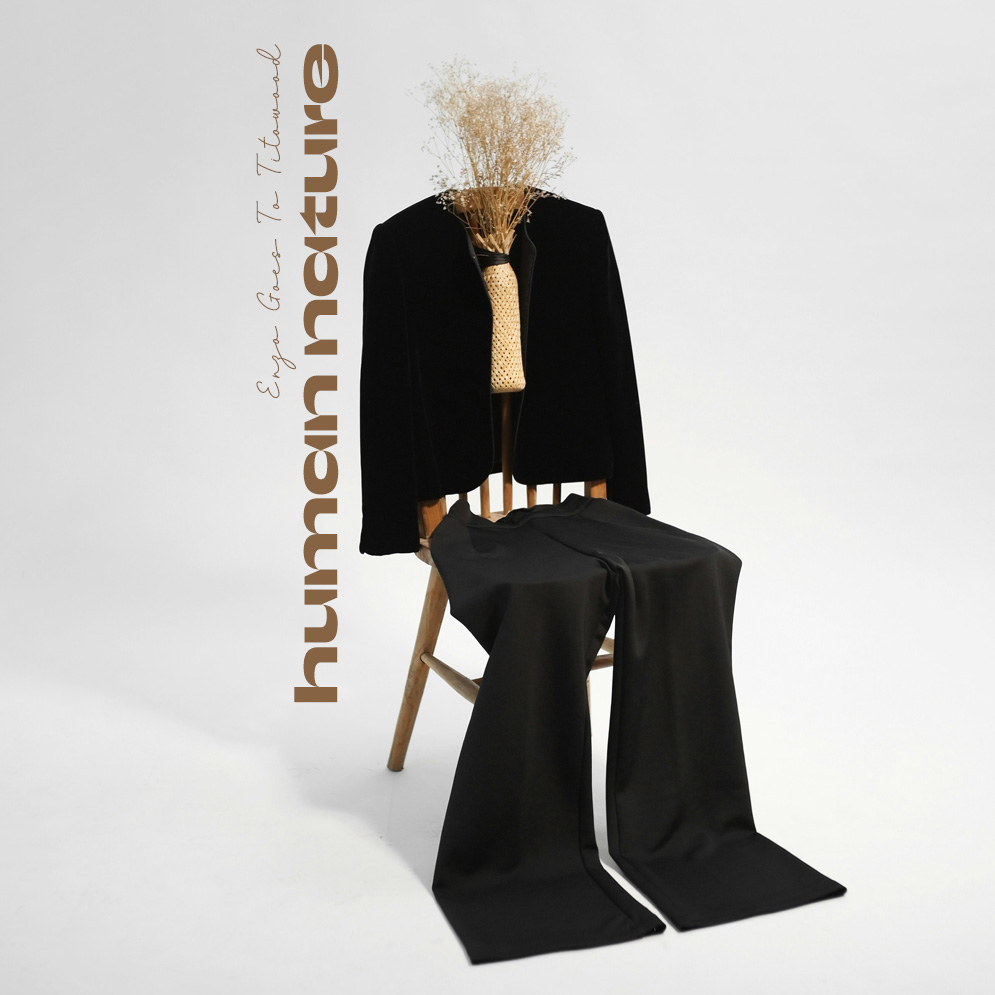
Human Nature
There’s a quiet honesty woven through Who I Am by Laufey, the kind that doesn’t arrive with drama, but with reflection. It feels intimate and unguarded, like a conversation held softly in the late hours when thoughts become impossible to ignore.
At its heart, the track explores the tension between self-doubt and acceptance. It’s about the fragile process of understanding yourself while wondering whether that version is enough for someone else. There’s vulnerability in the lyrics, but also a quiet strength, a willingness to be seen without disguise, even when uncertainty remains.
What makes Laufey’s songwriting so affecting is the way it blends timeless elegance with deeply modern emotion. Her voice carries a warmth that feels almost weightless, yet every line lands with sincerity. The song doesn’t search for grand conclusions; instead, it lingers in the complexities of identity, love, and the fear of not quite measuring up.
For this reimagined version, I wanted to bring that emotional intimacy even closer.
The arrangement has been rebuilt around a new piano interpretation, allowing the song to unfold with more space and restraint. The piano moves gently beneath the vocal, sometimes delicate, sometimes unresolved, echoing the uncertainty woven throughout the lyrics. Familiar melodies remain, but they now breathe differently, slower, softer, more exposed.
Laufey’s original vocal stays untouched in the most part, (although cleaned and remastered) bringing focus and preserving the tenderness and nuance that define the performance. Against the stripped-back arrangement, every phrase feels more immediate, as though the song is being discovered in real time rather than performed.
This interpretation doesn’t try to change the meaning. Instead, it leans further into its quiet vulnerability, uncovering the stillness hidden beneath the surface.
Because sometimes the most revealing moments are not the loud declarations, but the softer questions we ask ourselves when no one else is listening.
Lyrics
Human nature is strange
I know you’re bad for me
And I never feel rage
At least, not so easily
Has addiction come for me?
I don’t smoke cigarettes
Don’t do things I’ll regret
Don’t mood swing, shoulder bets
But baby, with you, that’s just how I get
I have every bit of you
Every awful corner
Biting more than I can chew
Just so I’ll feel warmer
What a greedy, hungry horror am I
I don’t smoke cigarettes
Don’t do things I’ll regret
Don’t mood swing, shoulder bets
Don’t cut strings to attach to
Just some far-sought silhouette
A journey that I’ll one day dread
I’m caught up in a web
I’m blinded by you, that’s just how I get
That’s just how I get
I don’t smoke cigarettes
Don’t do things I’ll regret
(I need more tempo)
Don’t mood swing, shoulder bets
But, baby, with you, that’s just how I get
(the pendulum swings back around)
Oh, that’s just how I get
(I need more tempo)
(Crave more sound)
(Crave more sound).
(right click | save as)
Related Posts
reading more
More media.